 Allyas

Neurodiversity
Some thoughts come more easily in writing. Send the question ahead of time and give a peer the space to answer in their own way.
Allyas is a global peer support movement for entrepreneurs and their partners, friends and families. Talk openly about mental health, neurodiversity and discrimination under an alias online or at a local gathering.
Scroll to exploreA launch update takes a few seconds. Hearing what it felt like takes another question and a little time.
How did the launch go?
“We sold out by noon. I’ve already ordered the next batch.”
How did it feel?
“I was so proud. Then I spent the whole night worrying we couldn’t do it twice.”
You can sign the biggest deal of your life on Thursday and feel alone on Friday. You can also be the person across the kitchen table, wondering what to say. At Allyas, each of you has room to talk about how the week felt from your side of the table.
About the founder

I started Allyas for myself.
I wanted a support network of my own. I wanted people I could talk to who understand what it takes to run a business and would give me room to talk about the rest of my life, too.
I was 25 when I was diagnosed with bipolar disorder. I rejected that diagnosis for 13 years. Then I was diagnosed with bipolar disorder again. I’ve had highs, and I’ve had lows so deep I couldn’t see a way out.
Running a business has highs and lows of its own. What made it harder was knowing that once people saw my diagnosis first, they could stop taking me seriously as an entrepreneur. I could bring them a business idea and they’d hear a whim I’d had during a high.
My experience is one among many. Neurodivergent entrepreneurs can face assumptions about how they think or work. Others are judged because of their sexual orientation, their gender or their race. Those experiences are different, and they can overlap. I want each person to have the space to say what it’s like for them.
That’s the kind of company I was looking for. If you’ve been looking for it too, there’s a place for you here.

Your mental health, your identity and the way you think are different parts of your life. You choose which of them to bring into a conversation.
Some thoughts come more easily in writing. Send the question ahead of time and give a peer the space to answer in their own way.
When someone tells you how racism shaped a meeting, take their experience seriously. Ask what support they want from you.
Use the name and pronouns a peer shares. Give their ideas the same attention you give the most familiar voice in the room.
Someone can talk about their partner or keep that part of life private. Let them decide what they want you to know.
Online community
Join a written circle under an alias. Read quietly, share what’s on your mind or ask how others have started a hard conversation with someone they love. You can also talk privately with a peer when you both say yes.
Join the online waitlist
What’s one thing you’ve wanted to say all week?
Local gatherings
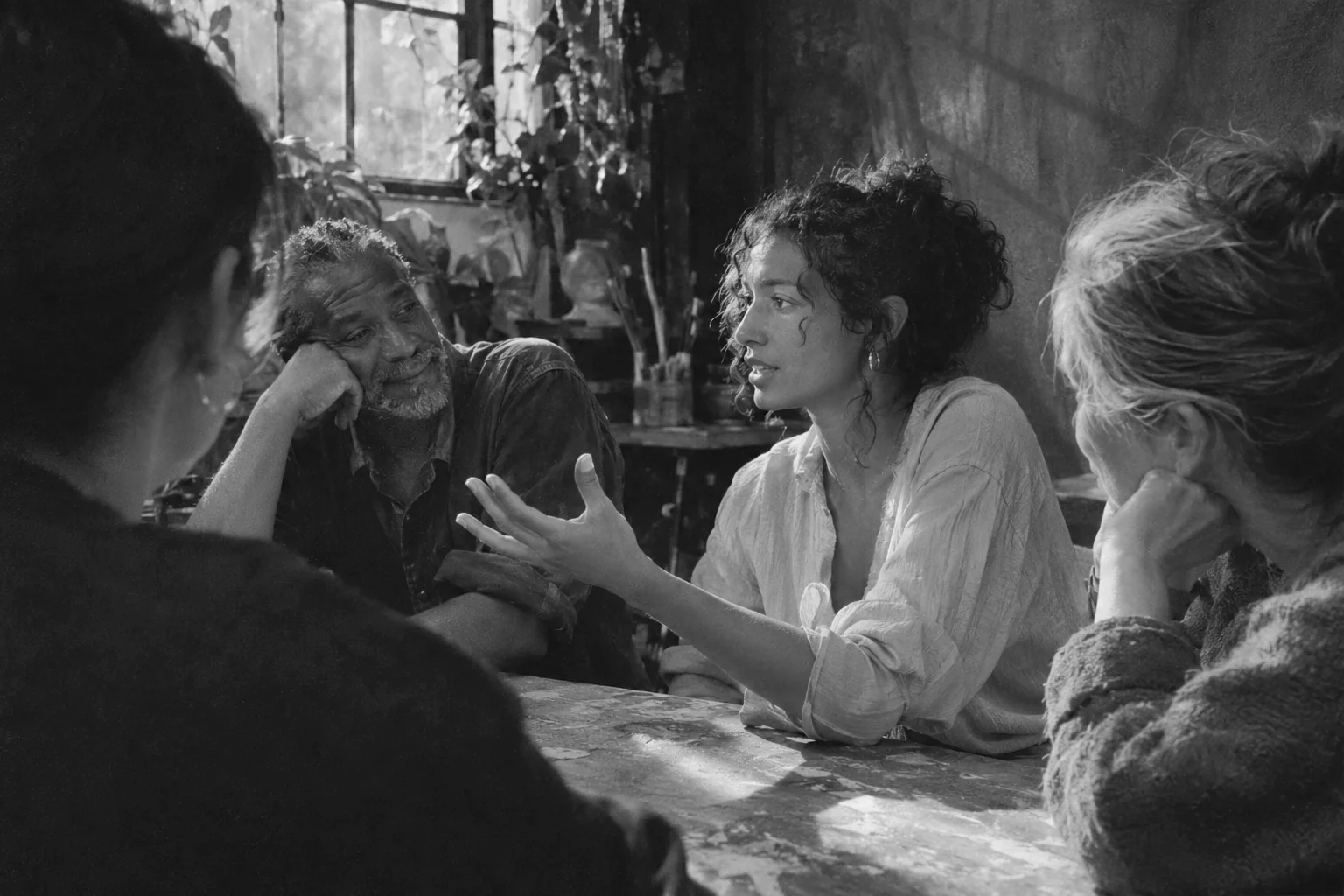
Come as an entrepreneur, a partner, a friend or a family member. A facilitator opens the circle with a question. You can talk about what it’s been like for you, ask someone to listen, or pass.
Join the local waitlistEveryone who joins agrees to the same code. Use an alias online. Speak from your own experience and leave out details that could identify you or someone you care about. Ask before taking a conversation further.
Keep what you hear in the circle. No screenshots, sales pitches or requests for funding. If someone crosses a line, you can report it to the community team.
I’m Moss.
I run in .
We won the contract.
I thought I’d feel better.
Moss decides which details to leave out before sharing.
Founders tell the story behind a hard decision, what it felt like to make it, and who they called afterward.
Practical reads on asking for support, finding words for a difficult week, or asking for a quieter room to pitch in.
Written Q&As with entrepreneurs about how identity shapes the way people hear their ideas, and the questions they wish someone would ask.
Our advisory circle will draw on members’ experiences to guide Allyas. Its guides will recommend topics for online conversations, help shape local gatherings and bring forward voices we haven’t heard.
Be the first to hear when the online community opens and local circles begin.